

STM32 Flight Controller Development:
Build a Real Drone Flight Controller — Not Just Another Demo
Go beyond theory and tutorials. Design and implement a complete quadcopter flight controller on STM32, handling IMU data, ESCs, RC joystick input, and PID control, with zero external libraries and a complete system-level understanding.
Lifetime
$40
$80
✔Intermediate-level
✔14-day money-back guarantee
✔Lifetime access
✔Certificate of Completion
✔ 37 lessons
✔ 8 hours of video content
✔ PDF Materials
Build a Real Flight Controller
Instead of copying existing firmware, you will develop the core systems yourself.
You will implement:
• motor control
• sensor integration
• attitude estimation
• stabilization control loops

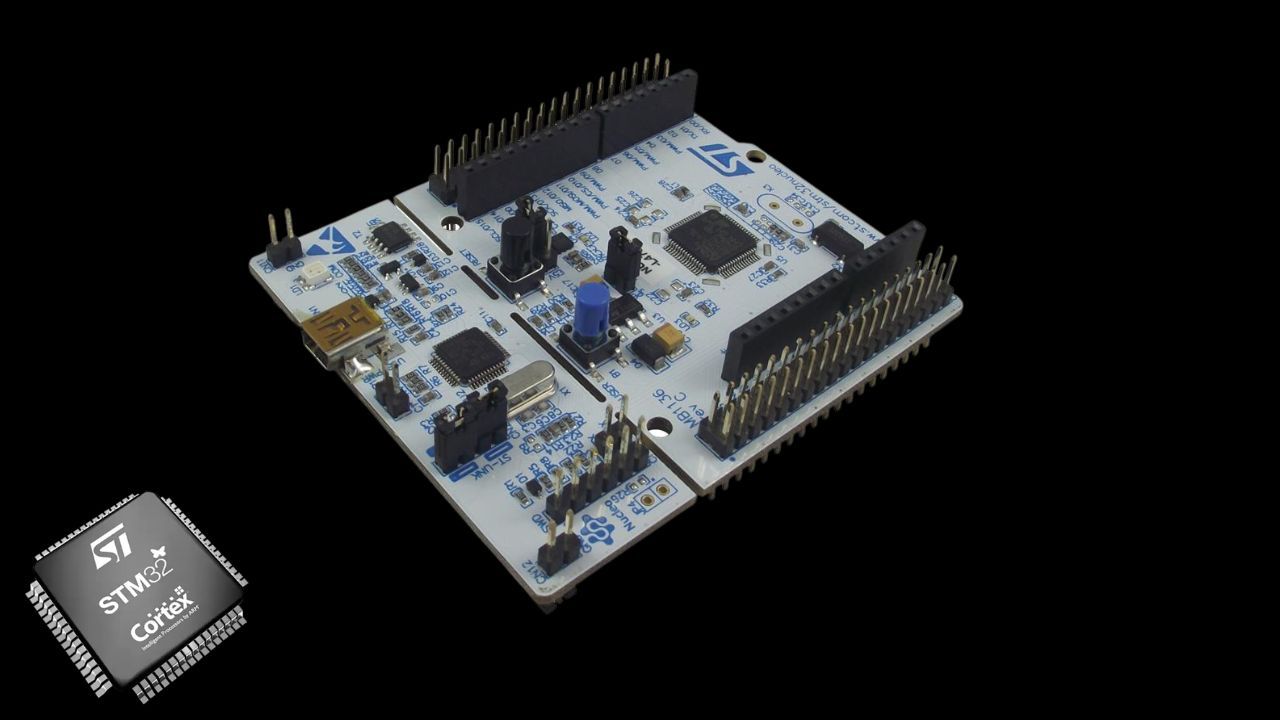
Master STM32 for Robotics
Learn how to use STM32 peripherals in real applications:
• SPI sensor communication
• Timer-based PWM for ESCs
• Interrupt-driven control loops
These are skills used in real robotics systems.
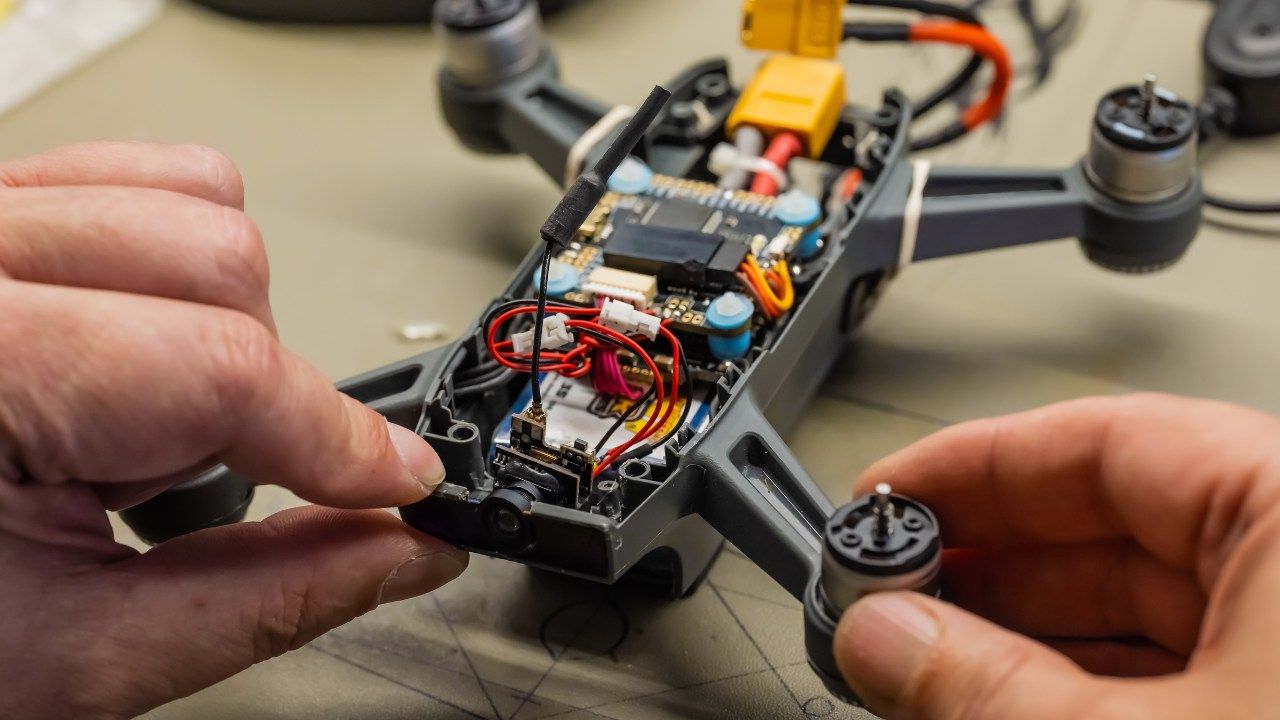
Understand Drone Algorithms
You will implement:
• complementary filter for orientation
• PID stabilization loops
• altitude estimation
By the end, you will understand why drones stay stable in flight.

Get Clear Answers to Your Questions
Learning accelerates when you ask questions.
You’re encouraged to be proactive and curious throughout the course. I respond to questions within 12 hours, and most of the time within 2–3 hours.
Steppeschool Reviews
Course Content
-
CH0: Introduction to the Course
3 lessons- 0 - Welcome to the Course
- 1 - PDF Slides
- Header/Source Files and Complete Source Code
-
CH1: Essential Components and Tools
3 lessons- 1 - Flight Controller and Drone companion
- 2 - Motor Connections
- 3 - ST-Link, Board programming
-
CH2: Motor Control
7 lessons- 1 - Motor Fundamentals
- STM32CubeIDE 2.0 and STM32CubeMx Project Setup
- 2 - PWM Generation to Control the Motor speed
- 3 - Motor Control Library
- 4 - BLDC Motor and ESC
- 5 - Running the BLDC Motor using the ESC and PWM signal
- Rate & review this course
-
CH3: IMU Integration
5 lessons- 1 - Welcome words
- 2 - SPI Configuration
- 3 - IMU SPI Intarface Check
- 4 - Library Integration
- 5 - Final test
-
CH4: Attitude Estimation
38 lesson- 1 - attitude estimation intro
-
Attitude Estimation Course Excerpt CH1
- 2 - STM32 CubeIde Project creation
- 3 - Using SWV for printf function
- 4 - Using SWV to plot variables
- 5 - SPI theory
- 6 - SPI Configuration using STM32CubeMx
- 7 - SPI wirings
- 8 - Reading ‘Who am I’ register
- 9 - Sending data through SPI
-
Attitude Estimation Course Excerpt CH2
- 1 - First version of the library
- 2 - Testing the library
- 3 - How to read the magnetometer?
- 4 - Magnetometer update 1
- 5 - Magnetometer update 2
- 6 - Testing a new version of the library
- 7 - DMA Theory
- 8 - DMA configuration
-
Attitude Estimation Course Excerpt CH3
- 1 - Removing gyroscope biases
- 2 - Magnetometer bias explanation
- 3 - Timer Update Interrupts
- 4 - Magnetometer bias removal
- 5 - Normalization and scaling of IMU data
- 6 - ARM MATH Library Installation
- 7 - Library Integration
- 8 - A notion of frame
- 9 - Testing the library
-
Attitude Estimation Course Excerpt CH4
- 1 - Attitude estimation, slides
- 2 - A notion of frame in detail
- 3 - 2D rotation
- 4 - Euler angles and Rotation Matrix
- 5 - Using the accelerometer to obtain pitch and Roll angles
- 6 - Using the magnetometer to obtain the Yaw angle
- 7 - Using the gyroscope to obtain the Euler angles
- 8 - Library Integration
- 9 - Complementary Filter
- 10 - Testing the libraries
-
Final Library Integration
- 2 - timer update interrupt
- 4-library integration
-
CH5 - Proportional-Integral-Derivative (PID) Controller
6 lessons- 1 - pid introduction
- 2 - pid theory
- 3 - pid implementation
- 4 - Using PID for Tilt Angle Control
- 5 - pid tuning
- Rate & review this course
-
CH6 : Make the Drone Fly!
4 lessons- 1 - introduction
- 2 - library integration
- 3 - drone configuration
- 4-final integration
-
CH7 : RC Joystick Integration
4 lessons- 1 - RC Joystick Introduction
- 2 - RC Joystick Explanation
- 3 - Timer Input Capture Mode
- 4 - Joystick Drone Control
-
CH 9 - Pressure sensor for Altitude Estimation
4 lessons- 1 - How to use the pressure sensor for the altitude estimation
- 2 - Integrating the library for the pressure sensor
- 3 - Demonstration of the altitude estimation
- 4 - Altitude Control
Target audience
Built For Engineers Like You
➜ Who wants to understand every part of a complete robot— from sensors to control loops.
➜ Embedded developers ready to dive deep into flight controller firmware using STM32.
➜ Robotics enthusiasts who love experimenting with sensors, PID control, and motor drivers.
➜ Makers who want to build a robot that flies *because of their own code*, not prebuilt libraries.
NICE TO MEET YOU
Tutor
Greetings! I'm Yerke, the founder/editor/SEO/ loader/marketer of SteppeSchool. With a Bachelor's degree in Electrical Engineering and a Master's degree in Robotics/Mechatronics, I completed my Ph.D. in Robotics/Mechatronics.
Currently, as an automation engineer, I spend my free time teaching people about electronics, embedded programming, and robotics. For years, I've been curating insightful content on my YouTube channel (+700k views), offering valuable insights to students and enthusiasts alike.

Requirments
WHAT you'll need
✔ Or, your custom Hardware
✔ Basic knowledge of programming STM32 MCUs
✔ Motivation
More Details
Frequently-asked questions
What do I get after the enrollment?
Can I ask questions during the course?
Can I use a different STM32 board than the one used in the course?
Should I have prior knowledge of programming STM32 microcontrollers?
Start Building Your Own Drone Firmware
If you want to understand how drone flight controllers work internally, this course will guide you step-by-step.
Join the course and start building your STM32 flight controller today.
ENROLL NOW